Strategic Research Collaboration Between FH UGM and FH Undiknas: IUP Law Lecturer Joins the Research Team
Denpasar, Bali, July 21st 2026— The Faculty of Law at Universitas Gadjah Mada (FH UGM) and the Faculty of Law at Universitas Pendidikan Nasional (FH Undiknas) have established a strategic research collaboration to examine the position of Balinese traditional healing practices within the development of Indonesia’s national legal system. The study is entitled “Legal Uncertainty in Spiritual Practices: Can Balinese Traditional Healers Be Criminalized Under the Indonesian Criminal Code?” It focuses on the potential application of Article 252 of the Indonesian Criminal Code to spiritual healing practices performed by Jro Balian, or Balinese traditional healers.
As part of this collaboration, Dr. Dewa Krisna Prasada, S.H., M.H., a lecturer at IUP Law, Faculty of Law, Undiknas, joined the research team as the representative of Universitas Pendidikan Nasional. The study is conducted together with Dr. Airin Liemanto, S.H., LL.M., Ruth Jessieca, S.H., and Pasha Nalanda Nabila from Universitas Gadjah Mada. The involvement of an IUP Law lecturer reflects Undiknas’ active contribution to cross-university research that connects national law with the social realities, cultural traditions, and local wisdom of Bali.
Research Activities
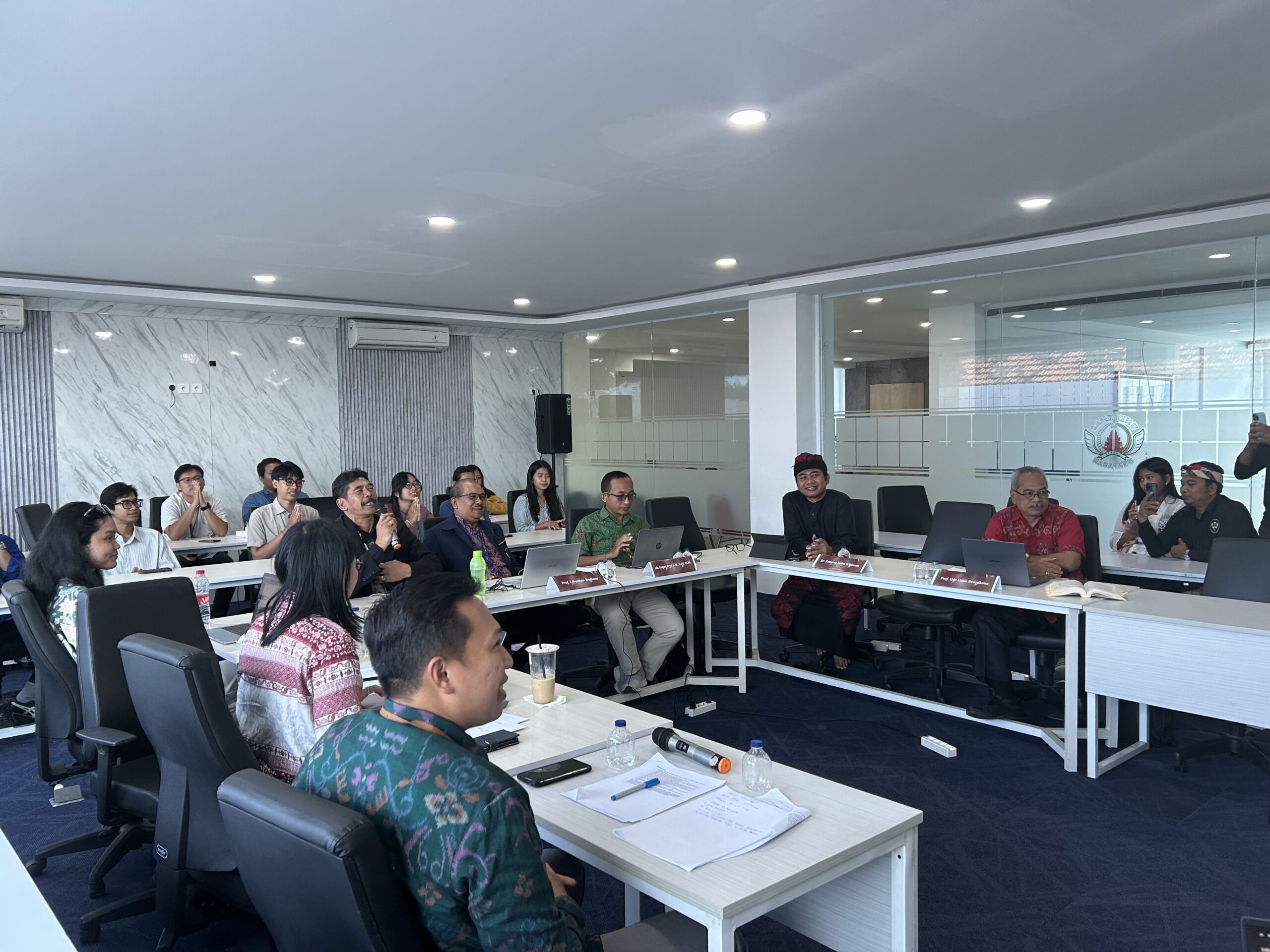
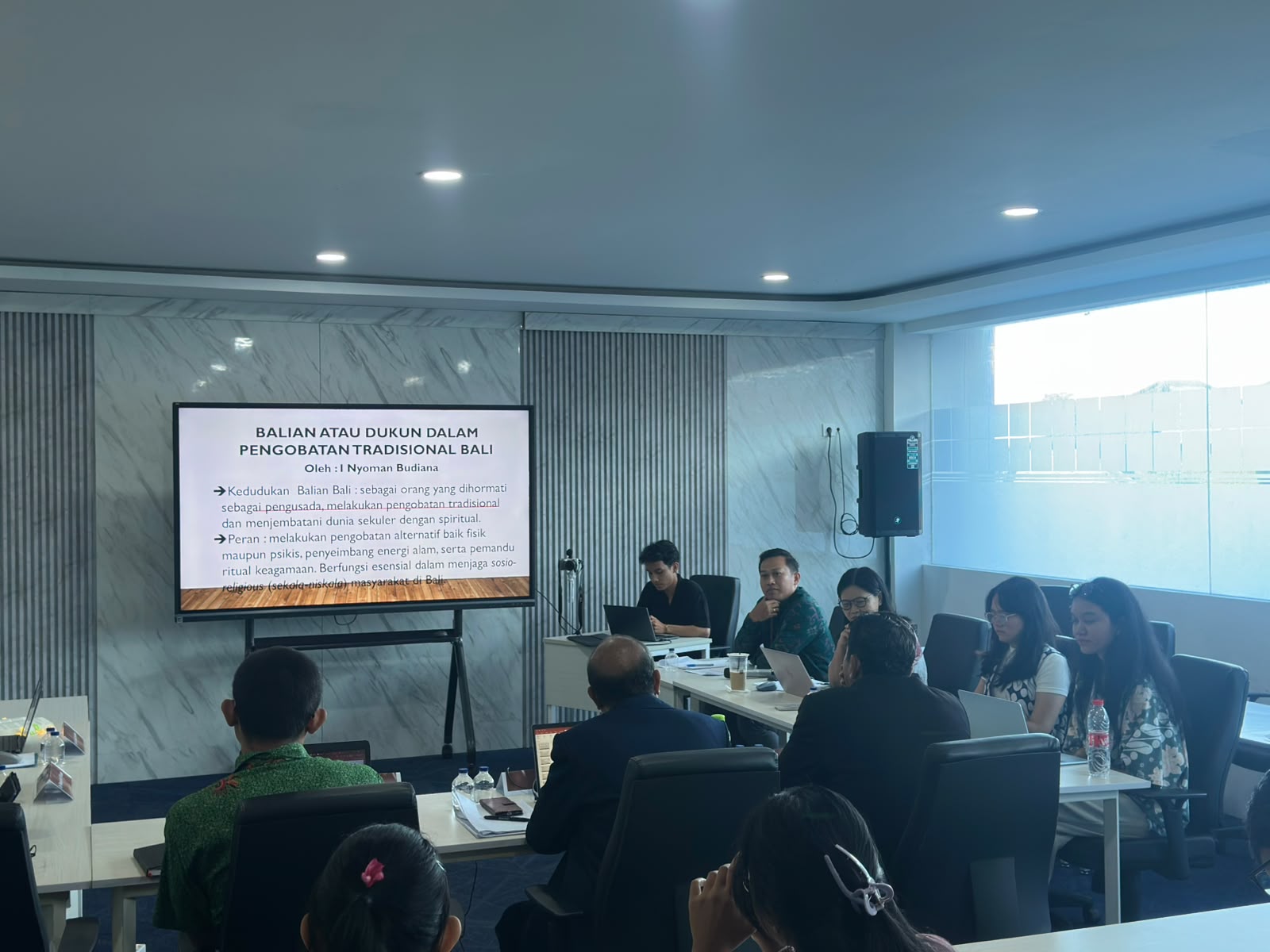
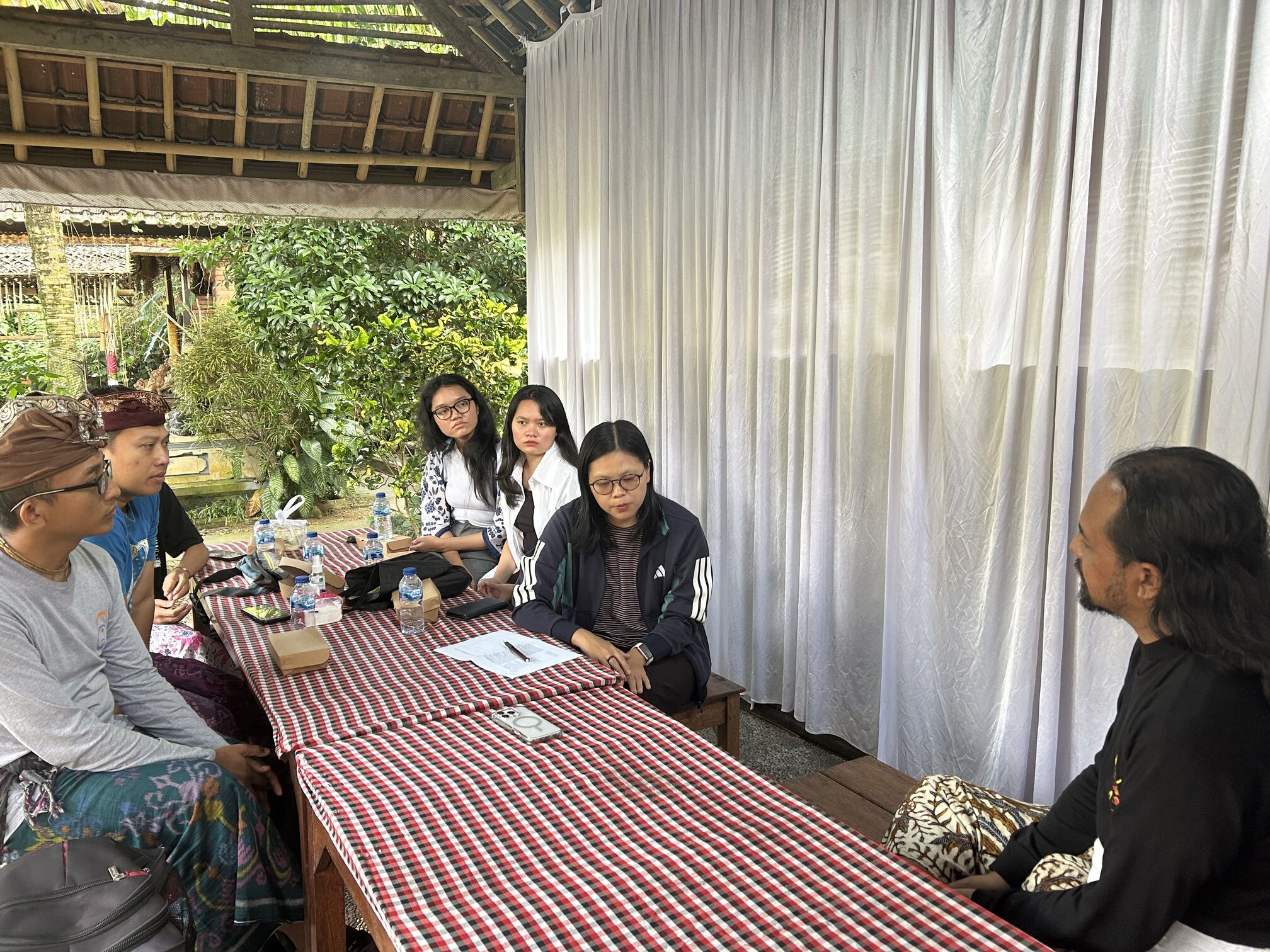
As the initial stage of data collection, the research team organized a Focus Group Discussion at the Faculty of Law, Universitas Pendidikan Nasional. The discussion brought together experts from various fields, including Balinese customary law, criminal law, traditional healthcare services, patient protection, Usadha manuscripts, and Balinese spiritual rituals and healing practices.
The speakers included Prof. Dr. I Nyoman Budiana, S.H., M.Si.; Prof. Dr. Drs. I Gusti Ngurah Sudiana, M.Si.; Prof. Dr. Gde Made Swardhana, S.H., M.H.; Dr. Komang Indra Wirawan, S.Sn., M.Fil.H.; and Ida Bagus Arya Lawa Manuaba, S.Pd., M.Pd. The FGD was held on Friday, 17 July 2026, at the Faculty of Law, Undiknas, and was also attended by students.
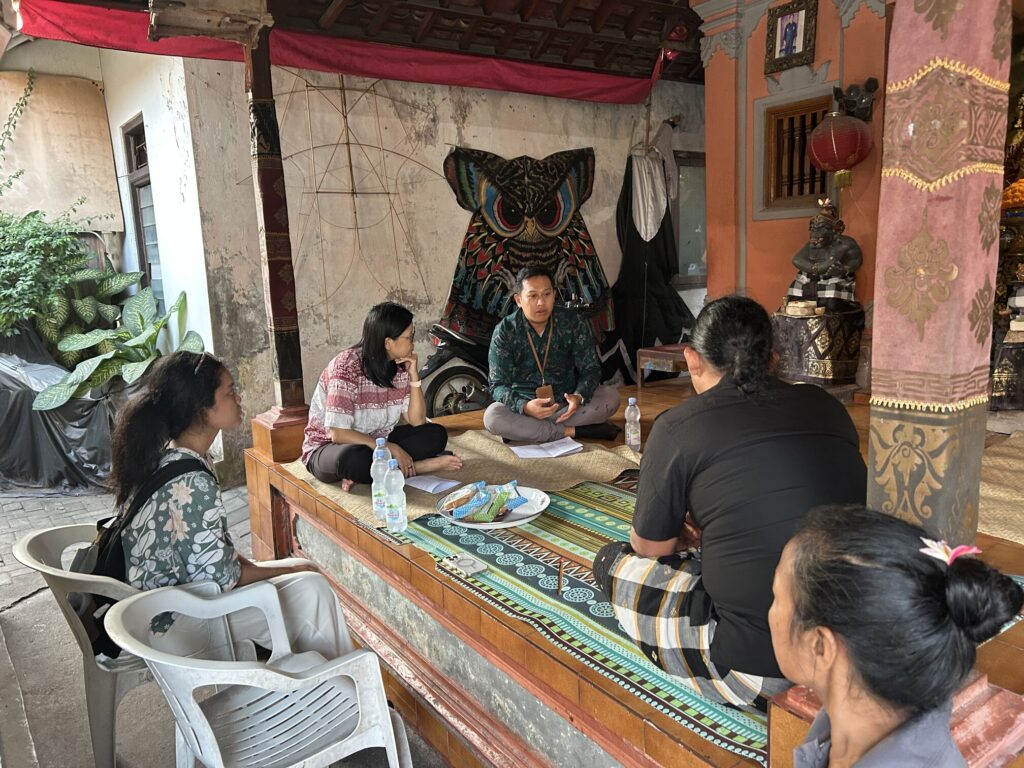
Following the discussion, the research team conducted fieldwork at several locations across Bali. This stage involved interviews, observations, and an in-depth examination of traditional healing practices, the use of Usadha manuscripts, the role of mantras and rituals, and the direct experiences of Jro Balian in providing services to local communities. The field data will serve as a foundation for understanding Balinese traditional healing practices comprehensively, rather than examining them solely through a textual interpretation of criminal law provisions.
Strengthening Balinese Customary Values within National Law
The research aims to analyze whether traditional healing practices involving spiritual elements may fall within the scope of Article 252 of the Indonesian Criminal Code. This issue is particularly important because Balinese Usada practices are rooted in philosophical, religious, social, and cultural foundations that differ significantly from practices involving the offering of supernatural powers intended to cause suffering to others.
Within Balinese tradition, the concepts of sekala and niskala, the visible and invisible dimensions of life, are understood as an inseparable unity. In general, Jro Balian do not actively advertise or offer their services. Instead, community members seek their assistance based on trust and word-of-mouth recommendations. Furthermore, payments received by Jro Balian may take the form of voluntary donations or contributions toward ceremonial expenses. Therefore, these practices cannot automatically be equated with profit-oriented commercial activities.
For this reason, the research is not only intended to identify the potential criminalization of Jro Balian, but also to formulate a legal protection model for traditional healing practitioners and their patients. The proposed model is expected to provide legal certainty while respecting the cultural rights of Balinese customary communities.
The research collaboration between FH UGM and FH Undiknas emphasizes that the development of national law should not disregard the local values that continue to exist within society. Instead, social experiences, traditional knowledge, and Balinese customary wisdom should be recognized as important sources in the formation, interpretation, and implementation of national law.
Through this study, FH UGM and FH Undiknas seek to ensure that Indonesia’s criminal law reform does not undermine cultural practices that have been passed down across generations. National law is expected to develop contextually, respect legal pluralism, and provide appropriate recognition for Balinese customary values as an integral part of Indonesia’s identity and legal heritage.
Tag:MOU, wisuda 2026, wisuda undiknas